I’ve been in a career ecosystem for several decades where we move the leader around to different contexts every 3-5 years or so. My dad was in the same ecosystem so it’s all I’ve known since I was an infant.
Transition to a new place.
Live in a home we didn’t choose.
Make new friends.
Help however we can.
Get asked to go to the next place.
Start all over.
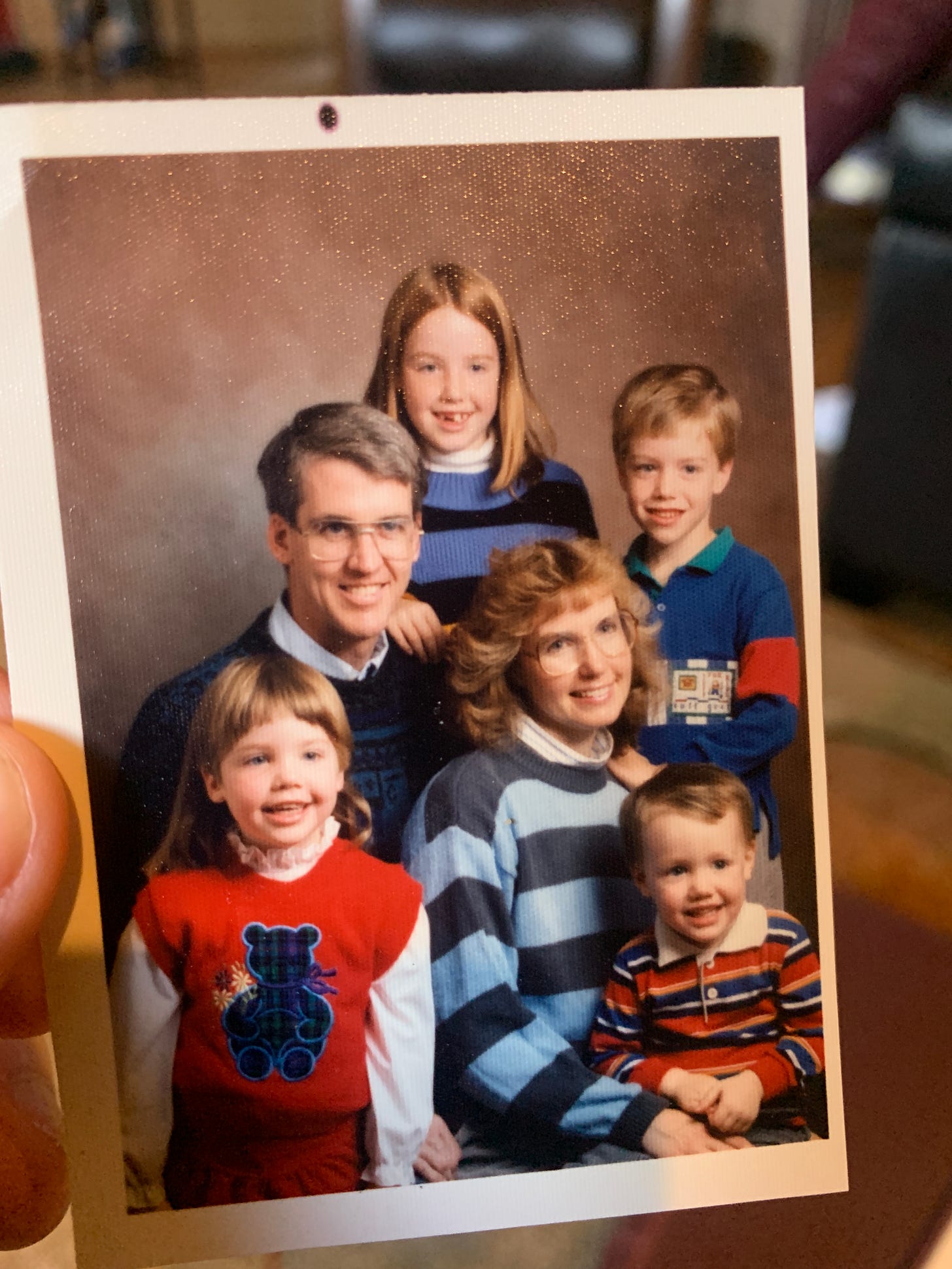
One of the downsides to this rhythm as a child and adult is a set of skills I didn’t have time to learn well.
I haven’t stayed in one place long enough to evolve without disappearing.
I got to change and evolve in the physical and emotional transitions of moving to a new community. I could set ways of being down and pick up new ways of being me without having to really live that in front of others.
But now?
I’m learning how to evolve without packing up my entire home and starting over.
It’s awkward.

There’s a reason the “disappear, reinvent, return” fantasy sounds nice. It protects our dignity. We get to skip the part where we’re visibly unsure, inconsistent, or outgrowing old version of ourselves in real time. But the cost of that fantasy is that it quietly trains us to believe our growth only counts if it’s polished.
Real growth doesn’t work like that.
Growth happens in the middle of the clumsy new choice. The decision to stop one kind of behavior and allow a more natural one to emerge. And when we do this in public — with our actual relationships and work — we lose control of any kind of narrative of our lives.
We’ll feel misunderstood.
Some will prefer the old version of us.
Some won’t notice changes at all.
Some will meet us but we don’t yet know who.
The thing is — so much of growth is relational. We are becoming new in the presence of others. And that involves friction, grief, renegotiation, and repair.
May I also gently remind us: There’s a quiet courage to letting people witness your unfinishedness. When you don’t hide the fact that you’re in process. In motion. In some kind of evolution.
It disrupts the illusion that any of us are completely settled and finished.
And maybe you being in process gives others permission to do the same.

The Thread
Part of that tension bubbles up when I reflect on what we’ve created right here.
I started The Thread in August of 2022. Six months after Jeremy died. Just as my ADHD and autism journey unfolded. This has been a beautiful space to practice curiosity together. To gently tug on a few threads and trust what’s underneath.
You’ve allowed me to carve out a home that felt different than my local church work. I’ve expanded the language I use to describe the sacred in ways I haven’t felt as free to do in the church.
In some ways, this space enabled me to embody the kind of radical curiosity that led me to this evolution into The Gentle Way. To setting down a significant part of my identity as a pastor. To following a nudge that hasn’t left me alone in the past 5-6 years.
The awkward invitation
I processed some of this last year with my therapist and he said the thing I needed to hear: “It would be easier to cut ties and run because that’s what you’ve gotten to do in the past. Maybe the growth area is to stay put, make your transition, and slowly figure out new rhythms and boundaries that feel like you.”
So that’s what I’m awkwardly attempting to do now.
Part of me still wants to cut ties and run. To disappear so I can evolve in secret and then emerge as some fully-formed new person.
But I see the value in learning this new skill set. My invitation is to gently set down a way of being me that doesn’t support who I really am. And I’m choosing to do some of that work right here in this beautiful space we’ve created.
Around the corner
In the next couple months, you’ll see a shift here as we move into The Gentle Way chapter of my work. Essays and poems will still center our flow. You’ll see opportunities to connect in 1:1 sessions or groups.
We’ll likely shift platforms during this transition and I’ll make it as easy as possible on your end.
I’ll be writing for anyone who finds their way here, while holding intentional space for neurodivergent women who are tired of performing their lives and and are ready to come back to their bodies and a gentler way of being.
For those who’ve asked how to support The Gentle Way
The Gentle Way will be funded by new clients, group offerings, and retreats.
If you want to be a part of supporting the work of The Gentle Way — not just for yourself, but for others who need it — you can become a paid subscriber later this year. Your gifts enable me to offer a sliding scale to future clients who need sustainable support. Your gifts support my family and I, while making room for others to find their way here.
You’ll hear a little more about in the next few weeks, but for those asking, here it is!
Beloved readers, thank you.
It’s awkward to change right in the midst of every day life. And yet, that seems to be the ever-present invitation. To allow dissonance to be named. To make room for something to loosen and unravel. To let a fear be seen. To see shame dissolve. To see Love do what it loves to do.
I’m thick in the transition work of loving my current community of people the best I can while starting to gently set down this part of my work in the world.
In a few short months, I am beyond grateful to be stepping into a new kind of space and I’d love to have you join me for our next adventure!
Cheering you on always,
Jenny
Reflection Questions
- Where in your life have you relied on starting over to make change feel possible—and what might it look like to let yourself change while being fully seen?
- What parts of you feel safest when you imagine leaving… and what parts of you are asking to be practiced, slowly, right where you are?
- If you didn’t have the option to disappear and reinvent, what small, honest shift would you make in how you show up this week?
- What would it mean to build continuity with yourself—to let people witness your evolution instead of introducing them to a “new version” of you?


