Hey, I'm Jenny.
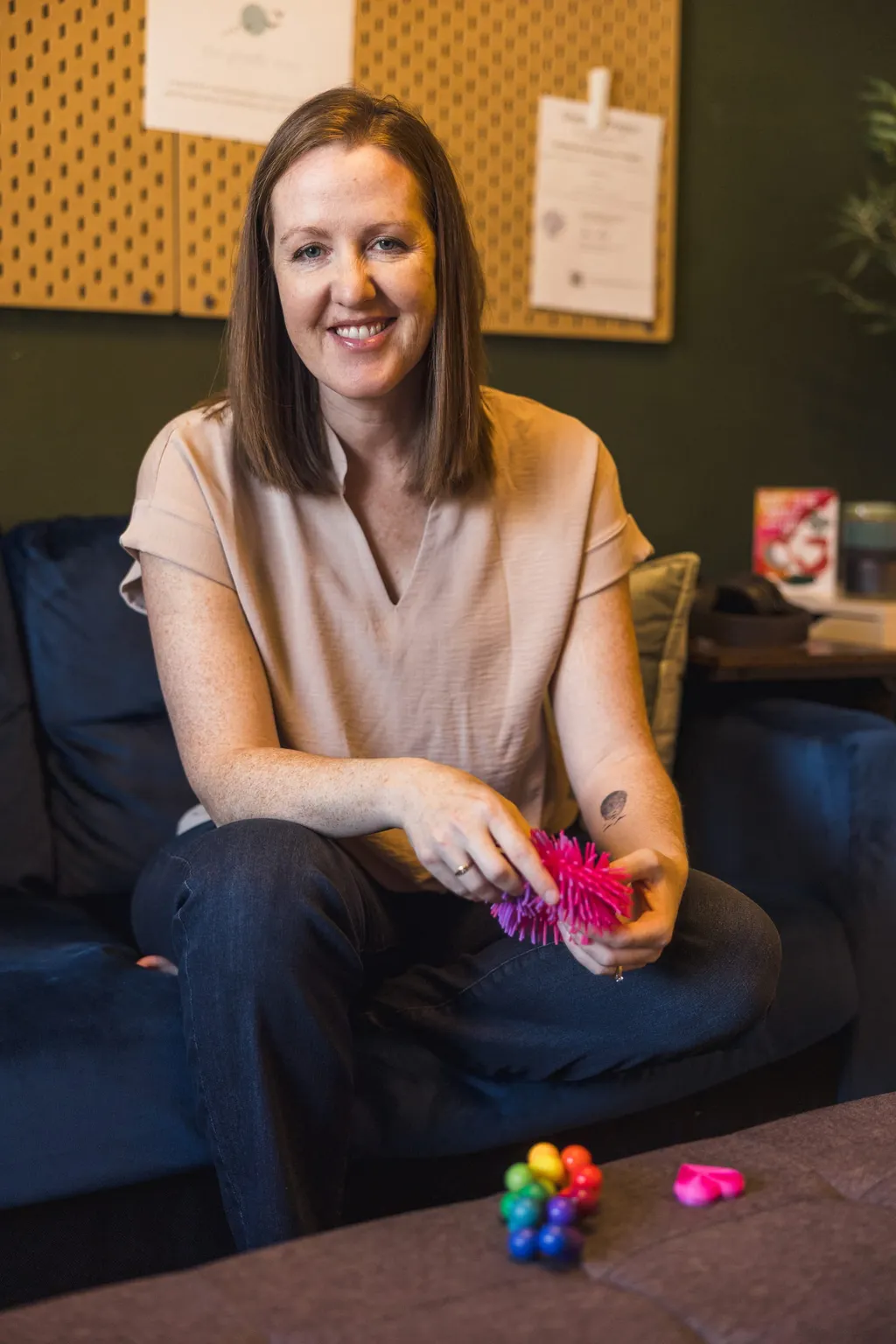
I help people understand themselves from the inside out.
I'm interested in the whole world inside you—the sensations, stories, emotions, memories, protective patterns, younger parts, longings, contradictions, and wisdom that make you who you are.
My work is a form of relational, somatic accompaniment. I create a space where you don't have to arrive with everything figured out. You can bring the thing you're carrying, and together we can slow down enough to notice what's actually happening.
Sometimes that means listening to your body.
Sometimes it means getting curious about a part of you that keeps showing up in ways you don't understand.
Sometimes it means tending to something younger that still needs your attention.
Sometimes it means making room for grief, anger, overwhelm, desire, uncertainty, or a life that no longer fits the way it used to.
And sometimes it simply means having another person beside you who isn't trying to fix you.
You are not a problem to solve.
You are a person worth knowing.
How I work
I draw from several different practices and traditions, including somatic experiencing, nervous-system attunement, Internal Family Systems and parts work, inner-child work, trauma-informed practice, and my decades of experience in pastoral care and spiritual accompaniment.
You don't need to know what any of those things mean before you come work with me.
They're simply some of the ways I've learned to listen.
I might invite you to notice what is happening in your body. We might become curious about a part of you that is anxious, exhausted, angry, perfectionistic, protective, or afraid. We might explore an old story and discover that your body has been carrying it differently than your conscious mind realized.
The goal isn't to analyze yourself perfectly.
It's to develop a different relationship with yourself.
More curiosity.
More compassion.
More room.
More trust in your own experience.
Over time, I want you to need me less—not because we've fixed you, but because you're becoming someone you can increasingly listen to, understand, and care for yourself.
I've been accompanying people for a long time.
For more than 20 years, I was a pastor, spiritual companion, retreat leader, writer, and person people came to when life got complicated.
I sat with people in hospital rooms and coffee shops. I listened to stories of grief, marriage, parenting, faith, doubt, identity, loss, anger, joy, and enormous change.
I learned that people rarely need another person to tell them what to do.
More often, they need somewhere safe enough to hear themselves think.
They need someone willing to stay curious when things get messy.
Someone who can sit beside them without rushing toward a solution.
Someone who can help them notice what they already know somewhere underneath all the noise.
That is the part of pastoral care I never wanted to leave.
So I didn't. I simply changed the container.


And then I started understanding myself differently.
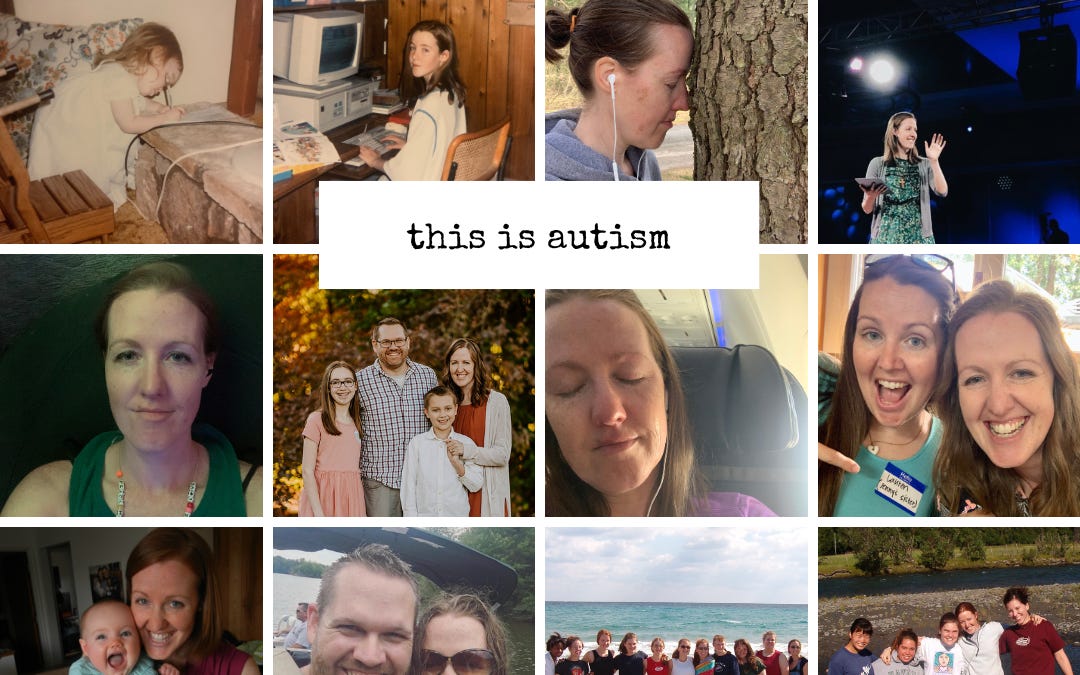
I'm autistic and ADHD.
That understanding came later in my life, after years of trying to make sense of an internal experience that often seemed much bigger, louder, stranger, or more complicated than what other people seemed to be experiencing.
Learning about my neurodivergence changed the way I understood myself.
I began noticing how much energy I had spent masking, performing, overriding my body, and trying to become easier to understand.
And I started asking a different question:
What if I don't need to become less of myself?
What if I need to understand myself better?
That question has changed the way I work with other people, too.
I'm particularly drawn to people who have spent years adapting themselves to fit a world that didn't quite make sense to them—whether or not they have a diagnosis.
People who are sensitive.
People who are overwhelmed.
People who are deeply feeling.
People who are tired of performing.
People who keep wondering, Why am I like this?
People who are beginning to suspect that their struggles might make more sense than they were ever taught to believe.
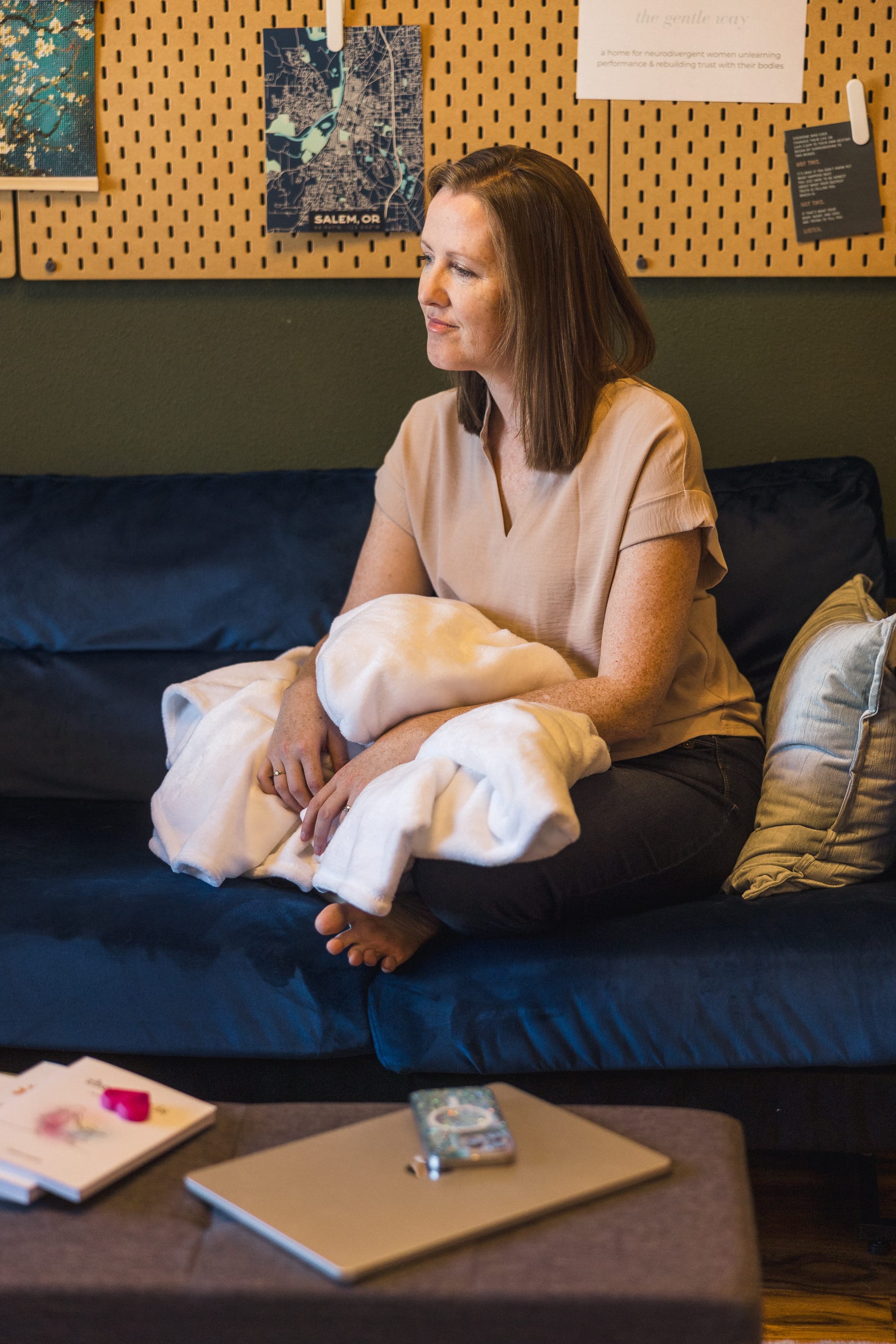
Bring me the thing.
You don't have to know what it is.
You don't have to have the right language.
You don't have to make it make sense before you arrive.
Bring the grief.
The stuckness.
The question you've been carrying for three years.
The part of yourself you don't understand.
The body that won't cooperate.
The relationship that keeps hurting.
The overwhelm.
The longing.
The thing you can't quite name.
We'll start there.
I'll help you slow down enough to listen. And we'll see what your inner world has to say.
Things I've learned by living them
 Jenny Smith
 Jenny Smith
 Jenny Smith

 Jenny Smith
 Jenny Smith

Want to get to know me a little better?
I write regularly about inner worlds, neurodivergence, embodiment, grief, identity, and the strange and beautiful work of becoming more at home in ourselves.